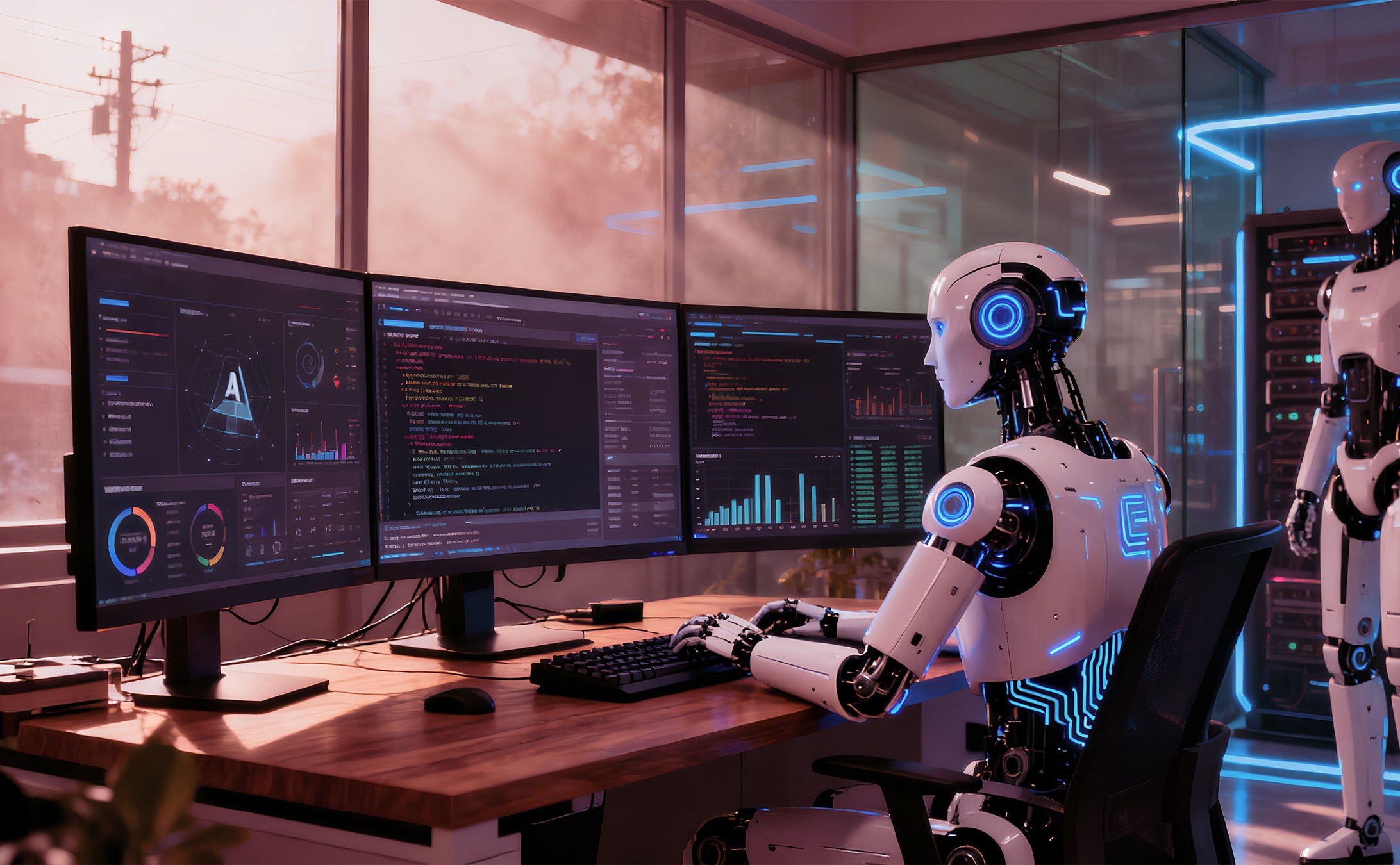
The Potential of Artificial Intelligence in Software Testing
Artificial intelligence is rapidly reshaping how software testing is planned, executed, and maintained. Thanks to diverse AI applications, testing is no longer a manual, time-intensive activity. It has become faster, smarter, and more predictive with the use of AI-driven tools.
AI-enabled testing processes fast-track intelligent test case generation and improve test coverage. They also facilitate defect detection by analysing large volumes of data and identifying patterns. According to Gartner, AI-supported testing can reduce test maintenance effort by up to 30%.
Similarly, McKinsey reports that automation-led quality practices can accelerate release cycles anywhere between 20% to 40%. A software development company tend to proactively deploy AI in development and testing procedures.
Understanding the role of AI in testing
AI in software testing refers to the use of the following technologies to improve the testing procedures:
- Machine learning (ML)
- Natural language processing (NLP)
- Predictive analytics
- Computer vision
- Generative AI
The above-listed technologies allow QA analysts to test systems and learn from data. They facilitate recognising patterns and continuously optimise test processes.
With AI-powered testing tools, teams can automate various day-to-day tasks involved in testing processes, like:
- Test case generation
- Regression testing
- Defect detection
- Test data creation
- Partial or complete test maintenance
This significantly reduces manual effort. Additionally, using AI in testing increases accuracy and consistency. However, AI automation and testing methods still require human oversight. For example, testers bring contextual understanding and business awareness. They also empower the process with ethical judgment that AI systems cannot replicate.
Here are 7 reasons why AI is essential in modern testing practices
1. AI-driven test creation and design
One of the most impactful applications of AI in testing is test creation. Traditionally, testers would drive test cases from business requirements. They would also use functional specifications or user stories. These are collectively known as the test basis. However, this process demands time, experience, and careful interpretation.
AI can assist by analysing natural language requirements using NLP. Further, the technology automatically generates relevant test scenarios. Combined with advanced algorithms, AI can also apply sophisticated test design techniques. This includes pairwise testing or orthogonal array testing. They help to ensure optimal coverage with fewer test cases.
Overall, this results in:
- Faster test creation
- Reduced human error in test design
- Broader and more systematic coverage
Although human validation is still required, AI significantly accelerates the early stages of testing. Various AI tools help to enhance productivity in testing processes, such as ChatGPT, Copilot (Microsoft), Gemini (Google), Claude, and Perplexity.
2. Predictive analytics and smarter defect detection
AI excels at identifying patterns across large datasets. In software testing, this capability enables predictive analytics. It highlights high-risk areas of an application before failures occur.
AI analyses historical test results, defect logs, and code changes. This helps the technology to:
- Predict where defects are most likely to appear
- Identify recurring failure patterns
- Suggest potential root causes
These insights allow testers to prioritise critical test areas. They can focus their expertise where it matters most. According to industry research, predictive quality analytics can reduce escaped defects by up to 25%. This helps to improve software reliability and boost customer satisfaction.
Ready to bring intelligence into your testing strategy?
Explore how AI-driven testing can improve quality, speed, and confidence in every release.
Get in Touch
3. Automating test maintenance
Test maintenance is one of the most resource-intensive aspects of automation. Even minor changes to the application interface or workflow tend to break dozens of automated tests.
AI resolves this problem by enabling more resilient test maintenance. For example, the machine learning models can automatically recognise changes in UI elements. Further, they update object locators and adjust test scripts. All of these are achieved without manual intervention.
It helps to:
- Reduce test flakiness
- Lower test maintenance effort
- Enables faster adaptation to application changes
Further, this also delivers a significant return on investment. It is evident for teams running large automated test suites.
4. Generating realistic test data with AI
AI offers major improvements in test data management. The technology helps to create realistic, diverse, and compliant test data. This is difficult to achieve manually, especially across regulated industries.
Generative AI and reinforcement learning techniques enable the creation of synthetic test data. The data closely resembles real-world usage patterns. They also safeguard the sensitive information. This approach supports:
- Data privacy and compliance
- Edge-case testing
- High-volume performance testing
Teams can test more safely and more thoroughly by removing dependence on production data.
5. Visual validation and UX testing
Computer vision is redefining how visual testing is performed. Traditional automated tests struggle to detect subtle UI issues. They fail to perform optimally in cases like layout shifts, misalignments, or responsiveness problems.
AI-powered visual validation tools compare application screens using perceptual models. They do not rely on pixel-by-pixel checks. This allows them to detect issues that human eyes might miss. This includes:
- Identifying minor UI inconsistencies
- Cross-device responsiveness problems
- Accessibility violations
Visual quality testing supported by AI plays a crucial role in maintaining brand trust. An AI development company deploys artificial intelligence to ensure building world-class products with brand values at a fast pace.
6. Real-time monitoring and risk management
AI is increasingly used beyond pre-release testing and extends into production monitoring. AI systems can continuously track application behaviour, performance metrics, and user interactions in real-time. This enables:
- Immediate detection of anomalies
- Faster incident response
- Proactive risk management
This enables teams to prevent costly downtime and reputational damage. This has become possible because of identifying potential failures early,
7. Addressing data privacy and ethical concerns
Despite its advantages, AI adoption in software testing raises valid concerns around data privacy and security. Many organisations are hesitant to share intellectual property, source code, or sensitive business data with AI systems.
Responsible implementation is essential. Leading organisations limit AI usage to areas that do not require access to confidential data, such as:
- Test automation code generation
- Synthetic test data creation
- Test maintenance optimisation
Strong governance, transparent policies, and ethical oversight are critical to building trust in AI-driven testing practices.
The future of AI in software testing
AI is accelerating testing processes, improving accuracy, and enabling smarter quality strategies. However, it is unlikely to completely replace human testers. Various tasks require creativity, contextual reasoning, and ethical judgement. They will always demand human involvement.
Rather, AI will continue to evolve as a powerful collaborator. It will help with handling scale, speed, and pattern recognition. On the other hand, testers can focus on building strategy, exploring test-cases, and user empathy.
Organisations that embrace AI thoughtfully today will be better positioned to deliver high-quality software at speed tomorrow.
Conclusion
The potential of artificial intelligence in software testing is already delivering measurable improvements in efficiency, quality, and time to market. From intelligent test design and predictive analytics to automated maintenance and visual validation, AI is reshaping how modern software is tested. When combined with human expertise, AI becomes a catalyst for building reliable, scalable, and user-centric software.