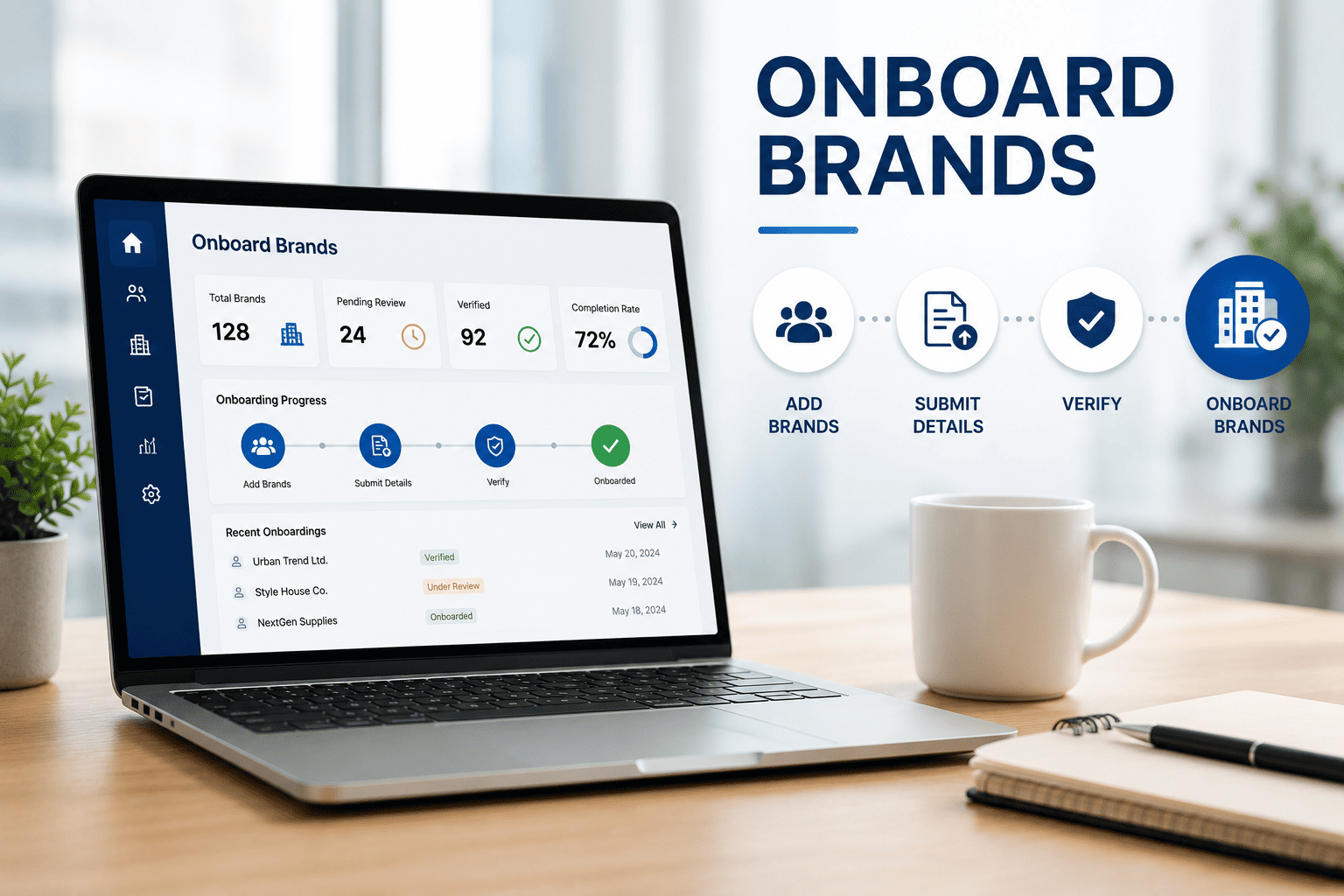
How Coding Sprint Helped Onboard Brands Build a Smarter Supplier Onboarding Platform
Retailers are asking harder questions now.
Not just, “Is this product good?”
But also, “Where did it come from?”
“Who made it?”
“Does this brand meet our values?”
“Can we trust the information we have been given?”
That last question matters. A lot.
For retailers, bringing a new brand into the business is not only a commercial decision. It can affect reputation. Customer trust. Compliance. Internal standards. Even the wider supply chain.
This is the space Onboard Brands was built for.
Onboard Brands is an assessment platform that helps retailers review the social, ethical, and environmental practices of the brands they want to work with. It was created by the founders of Akojo Market, a platform known for supporting artisan makers in emerging markets.
The idea was simple. But important.
Give retailers a clearer, more structured way to assess brands before onboarding them.
Coding Sprint was appointed as the software development agency to design and build a bespoke digital platform for this process. Not a generic portal. Not a basic form tool. A platform that could help retailers collect information, review documents, check compliance, and make better-informed decisions.
The problem was not a lack of Information
Most retailers already ask suppliers questions.
They ask for documents. Certificates. Policies. Proof of standards. Sustainability details. Ethical sourcing information.
The problem is how that information is collected and managed.
Often, it sits across emails. Spreadsheets. Shared folders. PDF attachments. Long forms. Different versions of the same document.
It becomes hard to know what has been reviewed. What is missing? What needs follow-up? What can be trusted?
And when a retailer is assessing more than one brand, the process becomes even heavier.
Onboard Brands needed to bring all of this into one place.
A clear process. A repeatable workflow. A better way to manage due diligence.
Talk to Coding Sprint and see how a bespoke solution can simplify complex workflows. Ready to build a smarter onboarding platform for your business?

Understanding what the platform needed to do
Before development started, the work began with discovery.
This mattered because the platform had to serve both practical and strategic needs.
Retailers needed a way to create assessments. Brands needed a way to respond. Documents needed to be submitted and reviewed. Compliance information had to be checked. Dashboards had to make the status of each brand easier to understand.
The system also had to be flexible.
One retailer may care deeply about environmental criteria. Another may focus more on ethical production, labour practices, sourcing, or documentation. Some may need detailed questionnaires. Others may want shorter assessment routes.
So a fixed form would not work.
The platform needed a custom questionnaire builder. Something retailers could shape around their own approval process.
That became one of the key parts of the build.
Building the frontend with React.js
The frontend was built with React.js to keep the platform fast, smooth, and easy to use.
Retailers needed to move between brand profiles, questionnaires, documents, verification results, and dashboards without friction. So the focus was not on making the interface flashy. It was about clarity.
React.js helped create a responsive experience where users could quickly see what had been submitted, what still needed review, and where each brand stood in the onboarding process.
Building the backend with Laravel
The backend was built with Laravel to support the heavier parts of the platform.
It needed to manage questionnaire logic, brand data, document submissions, user roles, retailer workflows, and API-driven verification. It also had to remain secure and scalable as more retailers and brands joined.
Laravel gave the system a solid structure for managing assessments, storing information, and supporting verification checks against global compliance databases.
The custom form builder
The custom form builder was one of the key features of the platform.
It allows retailers to create their own questionnaires based on their standards, from sourcing and sustainability to ethical practices and compliance requirements.
This matters because supplier assessment is rarely the same for every business. A fashion retailer may need one flow. A homeware retailer may need another.
The form builder gives retailers that control.
API-driven verification
Manual checks take time, and important details can still be missed.
The platform includes API-driven verification tools to check information against global compliance databases and support retailers during assessment.
It does not remove human judgement. It supports it.
Retailers still review answers, documents, and risks. But verification tools and AI-assisted alerts help flag areas that need attention.
As an AI development agency, Coding Sprint used AI in a practical way.
Features built into the platform
The final platform included several important features.
- A custom questionnaire builder.
- Brand onboarding workflows.
- API-driven verification tools.
- Document submission and review.
- Interactive retailer dashboards.
- Ethical and compliance evaluation.
- AI-assisted alerts.
- Compliance badge generation.
Each feature had a clear role.
The questionnaire builder helped retailers ask the right questions. The onboarding workflows helped keep the process structured. The document review feature made it easier to collect and assess supporting evidence. Dashboards helped retailers see progress and status. Verification tools supported more accurate checks.
And the AI-assisted alerts helped draw attention to things that may need a closer look.
Not to replace the reviewer.
To support them.
The outcome
The finished platform gives retailers a more organised way to onboard brands.
Brands can answer customised questionnaires and submit documentation. Retailers can review that information, check compliance details, and manage the assessment process from one place.
The platform also supports compliance badges and AI-assisted alerts, helping users identify important review points more easily.
For Onboard Brands, the result is a scalable platform built around transparency and trust.
It turns a process that can easily become messy into something more structured. More visible. More repeatable.
Final thoughts
Onboarding a brand is not just admin.
For many retailers, it is part of how they protect their values and their reputation.
That means the process needs more than scattered forms and email threads. It needs structure. It needs visibility. It needs a system that helps teams make careful decisions without slowing everything down.
That is what Onboard Brands set out to do.
And that is what the platform now supports.
A clearer way for retailers to assess brands.
A better way to manage due diligence.
And a stronger foundation for ethical, transparent partnerships.
Yes — these are now more conversational, fragmented, and less “SEO-template” style.
FAQs
What is a supplier onboarding platform?
A supplier onboarding platform helps retailers collect and review supplier information before they start working with a new brand.
Instead of chasing emails, forms, PDFs, and spreadsheets, everything sits in one place. Brand details. Documents. Questionnaires. Compliance notes. Review status.
Cleaner process. Less back and forth. Better visibility.
What features should a brand onboarding platform include?
A useful brand onboarding platform should include custom questionnaires, supplier profiles, document submission, compliance review workflows, dashboards, verification tools, and approval tracking.
But the real value is not just the feature list.
It is how those features work together. Helping retailers ask better questions. Review faster. Spot gaps. And make onboarding decisions with more confidence.
Why build a bespoke supplier onboarding platform instead of using standard forms?
Standard forms are fine for simple data collection.
But supplier onboarding is usually more detailed than that.
Retailers may need different questionnaires for different brand types. Document reviews. Approval steps. Compliance checks. Dashboards. Verification tools.
A bespoke supplier onboarding platform gives more control. It can match the retailer’s real process, not force the team to work around a basic form tool.