What is an AI Chatbot? A Complete Guide for UK Businesses
A few years ago, most conversations about AI chatbots felt theoretical.
Today, they are happening in boardrooms. Sales meetings. Customer service departments. And among business owners who simply want to stop answering the same questions repeatedly.
The reason is simple.
Businesses want to do more with the resources they already have. Teams are stretched. Customers expect instant responses. Enquiries arrive outside standard working hours. Meanwhile, competitors are becoming faster. More responsive.
This is why interest in AI chatbot development has accelerated across the UK. Approximately 88% of organisations now report using AI in at least one business function, says McKinsey & Company.
Many business leaders are researching: “What exactly is an AI chatbot, and does my business actually need one?”
Let’s break it down.
What is an AI Chatbot?
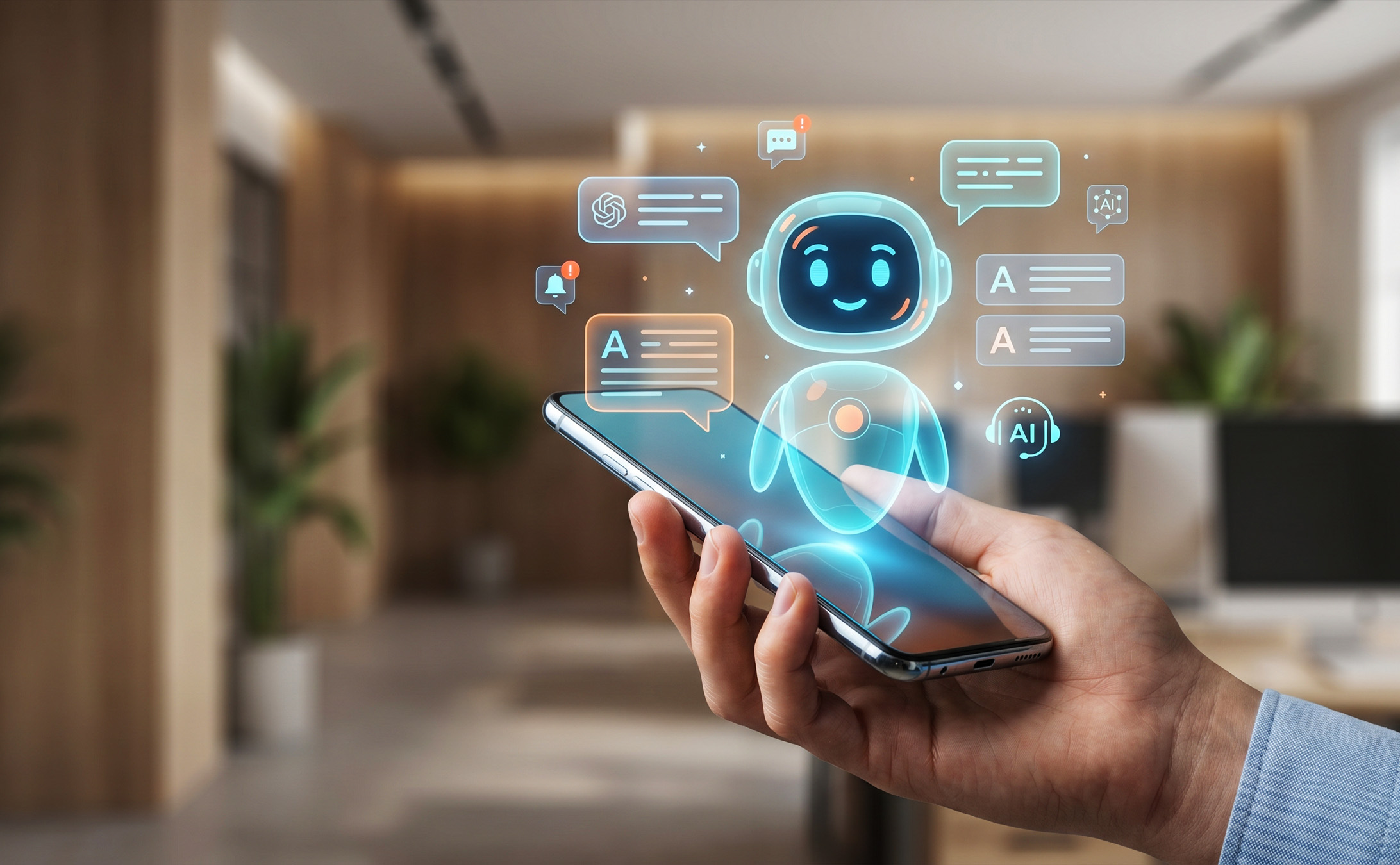
An AI chatbot is software that uses artificial intelligence to communicate with users through text or voice conversations.
Instead of following rigid scripts, modern chatbots can:
- Understand customer intent
- Interpret natural language
- Access business information
- Answer questions in real time
- Collect customer details
- Guide users towards specific actions
The best chatbots feel less like automated software and more like a knowledgeable member of your team.
However, not all chatbots are created equal.AI development services can help you create a personalised bot that drives faster responses.
Types of chatbots: traditional chatbots vs AI chatbots
Traditional chatbots operate through predefined rules. AI chatbots work differently. They can understand variations of questions. Maintain context. Provide more natural responses.
This is why businesses are increasingly investing in AI chatbot development rather than older rule-based solutions.
| Feature | AI Chatbot | Traditional Chatbot |
| Understanding Questions | Understands natural language and different ways of asking the same question | Responds only to predefined keywords or commands |
| Conversation Quality | More human-like and contextual conversations | Often rigid and scripted interactions |
| Learning Capability | Can improve responses based on data and training | Does not learn unless manually updated |
| Customer Experience | Personalised and dynamic responses | Generic responses with limited flexibility |
| Handling Complex Queries | Can answer multi-step and detailed questions | Struggles with anything outside predefined scenarios |
Benefits of AI chatbots for businesses
AI chatbots are no longer just customer support tools. When implemented correctly, they can improve customer experience, increase operational efficiency, and help businesses generate more leads without increasing headcount.
1. Deliver instant responses, 24/7
Customers expect quick answers. An AI chatbot can respond instantly to enquiries. This helps businesses stay available round the clock.
2. Reduce repetitive work
Many businesses spend hours every week answering the same questions. AI chatbots can handle common enquiries automatically. This allows staff to focus on higher-value tasks.
3. Capture more leads
Website visitors often leave when they fail to find the information quickly. AI chatbots can engage visitors. Collect contact details. Qualify prospects. Pass them to the sales team.
4. Improve customer experience
Customers appreciate fast and consistent communication. AI chatbots help users find answers, access services, and complete actions. It creates a smooth customer journey.
5. Scale customer support without adding team members
As enquiries increase, hiring additional staff is challenging. AI chatbots can manage multiple conversations simultaneously. They help businesses support growth without significantly increasing costs.
6. Qualify enquiries automatically
Not every enquiry is a good fit. AI chatbots can ask relevant questions. Gather requirements. Filter enquiries before they reach your team. This saves valuable time.
7. Support sales and marketing efforts
AI automation boosts ROI. For example, AI chatbots can recommend products. Guide users to relevant services. Promote offers. They help move prospects through the sales funnel more effectively.
8. Generate business insights
Every customer conversation provides valuable information. AI chatbots can help identify common questions. Handle customer pain points. Find opportunities to improve products, services, and website content.
9. Integrate with existing business systems
Modern AI chatbots can connect with CRM platforms, booking systems, helpdesks, and internal databases, creating a more streamlined and automated workflow.
We can help you save time, reduce repetitive work, and give your customers faster answers.Streamline and automate manual tasks with an AI chatbot.
What industries benefit most from AI chatbots?
Almost every sector can benefit, but the use cases differ.
1. Professional services
Law firms, accountants, consultants, and agencies often use chatbots to:
- Qualify enquiries
- Schedule discovery calls
- Explain services
- Answer common questions
2. Hospitality
Hotels, restaurants, and tourism businesses frequently use chatbots to:
- Handle booking enquiries
- Answer guest questions
- Provide directions
- Share availability information
3. Trades and local services
Electricians, plumbers, construction firms, and maintenance companies often use chatbots to:
- Capture job details
- Filter unsuitable enquiries
- Reduce unnecessary call-backs
- Gather project information before site visits
4. eCommerce
Retailers use chatbots to:
- Recommend products
- Track orders
- Handle customer support
- Reduce pressure on support teams
The rise of agentic AI: what comes after chatbots?
The next evolution is already emerging. Instead of simply answering questions, AI systems are beginning to complete tasks on behalf of users.
This is often referred to as agentic AI development. For example, future AI agents may:
- Book appointments
- Update CRM systems
- Generate reports
- Process customer requests
- Trigger automated workflows
Recent research shows businesses are increasingly exploring AI agent systems as they move beyond simple conversational tools.
For many organisations, today’s chatbot becomes tomorrow’s intelligent digital assistant.
Final thoughts
AI chatbots are practical business tools. They help organisations respond faster. Capture more enquiries. Improve customer experience. Reduce repetitive workloads. Successful AI implementations emphasise on solving actual problems.
Frequently asked questions
1. Does my business really need an AI chatbot?
You may need an AI chatbot if your team spends too much time answering the same questions. Missing enquiries outside working hours. Manually qualifying leads. It is most useful when customers need quick answers. Your team needs more time for higher-value work.
2. Will an AI chatbot replace my customer support team?
No, an AI chatbot should not replace your team. It should support them. The chatbot can handle simple, repetitive, and first-stage enquiries. On the other hand, your team focuses on complex questions. Sensitive conversations. Relationship-building.
3. Is an AI chatbot suitable for a small business?
Yes, many small businesses can benefit from an AI chatbot. Especially if they receive regular website enquiries. Booking questions. Quote requests. Customer support messages. The best approach to add AI is to start simple.
4. How much does an AI chatbot cost for a UK business?
The cost depends on the chatbot’s features. Integrations. Training. Level of customisation. A basic chatbot may cost less. A custom AI chatbot connected to CRM, booking systems, or internal data will require a higher investment. The right choice depends on your business goals. Also, the problems you want to solve.