
What is Bespoke Software Development? A Complete Guide
Bespoke software development is the process of creating software that’s tailored to the needs of a specific business or individual. It’s different from off-the-shelf software, which is designed for general use. For example, consider Salesforce CRM, HubSpot, and Zoho, which are ready-made customer relationship management (CRM) software.
However, when running an enterprise, you might look for a greater level of personalisation and data security. Under such a scenario, bespoke software development is what you need. They are built to align closely with how businesses already operate.
Custom software plays a pivotal role in the growth of business organisations and helps to create out-of-the-box, unique solutions.
What is bespoke software development?
Bespoke software is also called custom software, personalised software, and tailored software, and they are built for a specific business organisation or a person. As the name suggests, they are designed to fulfill the specific needs of individuals and can easily fit into ongoing business operations.
You are the owner of the software code, and this allows greater flexibility in meeting futuristic needs. For example, with the growing business needs, you can make necessary code modifications, add APIs, and more.
Bespoke software is built with an agile method or follows the adaptive software development process.
What is off-the-shelf software?
Off-the-shelf software refers to commercial applications that can cater to a wide range of audiences. As pre-packaged solutions, they are designed to help different business industries with various in-built features.
For example, a wide range of industry verticals trust QuickBooks, Oracle NetSuite, and other similar applications for handling accounts.
Compared to bespoke software, they are cost-effective options but often lack unique features and are packed with various features that your business does not require.
We can help you plan, build, and scale with clarity.Transform your ideas into practical, growth-driven solutions.

Bespoke software vs. off-the-shelf software
| Feature | Bespoke Software | Readymade Software |
| Built for | Tailored exclusively for your business | Tailored for a wide range of business industries. |
| Price | It is a costly undertaking | Cost-effective, as you need to pay a rental fee, and there are also free-to-use, open-source software options. |
| Time | It takes anywhere between 2 and 6 months to build custom software. | You can instantly download, install, or set them up for use. |
| Pros |
|
|
| Cons |
|
|
What are the advantages of bespoke software development?
There are various advantages of building bespoke solutions, like high adaptability, greater business efficiency, and more.
1. Fulfill your unique business needs
Building a bespoke software development project can help businesses address specific problems and streamline their processes. It is built from scratch to serve all of your organisation’s goals effectively. So, you are equipped with a reliable IT infrastructure that helps your business grow and prosper.
2. Adjust to the latest scalability demands
Custom software solutions are designed to scale up with the growing user base. A software development agency can also integrate Cloud storage to tackle greater demands. This helps to ensure a seamless software performance.
3. Value for money
Although custom software requires a high upfront cost, it often delivers stronger long-term returns. Teams tend to adopt it faster because it fits how they already work, which improves productivity and reduces friction.
This shift is reflected in the wider market. According to Fortune Business Insights, the global software industry, valued at over $830 billion, is expected to grow to more than $2.2 trillion over the next decade, highlighting how businesses are increasingly investing in more tailored, scalable solutions.

4. Sole ownership
Building tailored software solutions from scratch empowers you with ownership of the source code. This means you have an edge in the market, and you can also commercialise your solutions as a SaaS product.
5. Offers robust security
One of the biggest drawbacks of off-the-shelf software is that hackers target it. Hackers view such software as a potential system to gain data on a large number of businesses. On the other hand, custom software is exclusively designed, which helps to avoid attention from malicious activities.
Disadvantages of bespoke software
1. High initial investment
Bespoke software development services require a big budget, and even building simple applications could take several thousand pounds. This makes building a bespoke software solution unsuitable for small business setups.
2. Takes significant time
The bespoke software development process involves several stages. It begins with research, planning, design, coding, testing, and launch. The last phase is maintenance, which is ongoing. The process takes 3 to 6 months and sometimes even more.
Addressing real business needs with custom software development
Most businesses struggle because their systems don’t quite fit how they actually operate. Research from McKinsey shows that 71% of customers now expect personalised interactions, and most become frustrated when those experiences feel generic.
The gap between what customers expect and what systems can deliver is high. This is where many organisations start to feel the strain. This is where custom software becomes practical. It acts as a way to align systems with how the business really works.
1. Scalability without rework
Growth usually exposes system limitations. What worked for 10 users starts breaking at 100. Custom software is designed with that progression in mind, so you’re not rebuilding your core systems every time the business expands.
2. Cost control over time
Off-the-shelf tools seem cheaper upfront, but costs add up across licences, integrations, and workarounds. A single, well-structured system often reduces long-term spend by removing duplication and ongoing patchwork fixes. The software development cost in the UK depends on the project complexity and engagement model.
3. A clearer competitive position
Many businesses end up using the same tools as their competitors. Custom software allows you to build around your strengths, whether that’s faster service, better data use, or a more consistent customer journey.
4. Better customer experience
Personalisation only works when systems can actually support it. Custom platforms can bring together customer data, behaviour, and interactions in one place, making it easier to respond in a way that feels relevant, not forced.
5. Security and compliance built in
Every industry has its own requirements. Instead of adapting generic tools, custom systems can be designed around the specific standards you need to meet, reducing risk and ongoing compliance issues.
6. Working with existing systems
Most organisations can’t start from scratch. Custom development makes it possible to connect with legacy systems, extend their value, and avoid unnecessary disruption.
7. Real-time insight, not delayed reporting
Decisions are often made with outdated data. Custom platforms can provide live reporting tailored to your KPIs, helping teams respond faster and with more confidence.
The different faces of custom software today
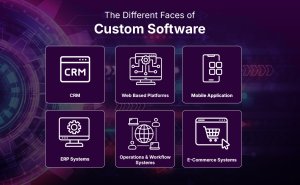
Custom software rarely arrives as a single “big system”. It tends to appear where the business feels friction, like in sales, operations, customer journeys, or reporting. Over time, these systems form the backbone of how the organisation runs.
What’s changed in recent years is how these applications are built and used. Many are now delivered through web app development. This makes it easier to access, maintain, and scale across teams.
Customer Relationship Management (CRM) Systems: Customer information is often scattered in inboxes, spreadsheets, and separate tools. A custom CRM pulls this together. It gives teams a clearer view of each customer. This helps to track conversations and keeps sales and support aligned.
Web-based platforms: For many businesses, the browser has become the main workspace. These platforms handle day-to-day operations, from managing orders to tracking performance.
Mobile applications: Some work doesn’t happen at a desk. Field teams, service staff, and even customers need access on the move. Mobile apps are built for that context. They provide quick inputs, real-time updates, and simple interactions.
ERP systems: As companies grow, different departments often end up using different tools. ERP systems bring those functions together, including finance, stock, HR, and supply chain, into one structure.
Operations and workflow systems: A lot of operational work still relies on coordination between people rather than systems. Custom workflow tools help manage tasks, track progress, and keep things moving.
eCommerce systems: Standard platforms work for straightforward selling. But when pricing, bookings, or customer journeys become more specific, businesses often outgrow them. Custom eCommerce systems give more control over how transactions happen and how customers move through the buying process.
When should you build bespoke software?
A software development agency can help you build bespoke software solutions. It is advisable to choose bespoke business software when:
- Your business requirements cannot be met with off-the-shelf software
- Following an innovative business model
- Your business handles sensitive data
- For compliance with industry standards and data privacy regulations
- Managing a growing business
- Integration with legacy systems
Conclusion
While bespoke software has advantages and disadvantages, it proves ideal in various situations. Your business may have several unique needs that cannot be fulfilled with readymade software.
At Coding Sprint, a bespoke software development company, we can help you build user-friendly solutions that drive ROI. Our consultants can analyse your business needs and create a well-defined project roadmap.